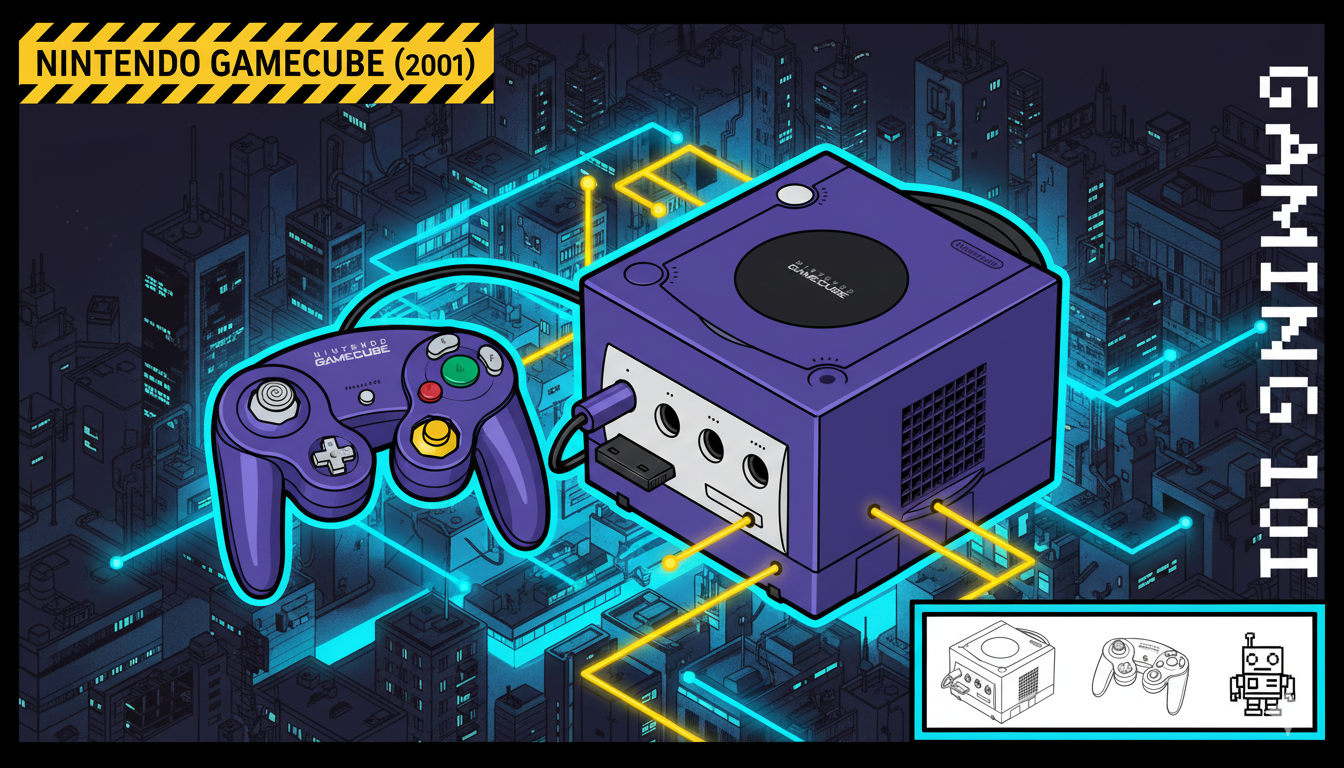
Nintendo GameCube (GC)
1. Presentation of the Machine
- Manufacturer: Nintendo
- Year of Marketing:
- Japan: September 14, 2001
- North America: November 18, 2001
- Europe (France included): May 3, 2002
- Marketing Price (approximate at the time):
- Japan: 25,000 yen (price dropped to 19,800 yen shortly after)
- North America: 199.99 USD
- Europe (France): Around 1,999 FRF (around €305)
2. History
The Nintendo GameCube is Nintendo's sixth-generation home console, launched as a successor to the Nintendo 64 and to compete with Sony's PlayStation 2 and Microsoft's Xbox. Nintendo opted for a compact, cube-shaped design (hence the name), with a built-in handle, and used proprietary mini-DVDs (8 cm optical discs) for its games.
The GameCube was a powerful machine, with a more "classic" and easier-to-program architecture than the N64 or PS2, which allowed for the creation of visually impressive games for the time. It benefited from one of Nintendo's best catalogs of first-party games, with titles that have become cult classics.
However, despite its strengths, the GameCube failed to overcome the PlayStation 2's dominance, and was also overtaken by the Xbox. Its main challenges were:
- Marketing Strategy: Nintendo struggled to shed its "family-friendly" image, failing to attract enough of the teenage and adult audiences that Sony and Microsoft were aggressively courting.
- Mini-DVD: The proprietary disc format, while fast, limited storage capacity compared to the PS2 and Xbox's standard DVDs, and the console did not play DVD-Video discs, which was a major disadvantage compared to the PS2.
- Lack of Third-Party Support: Although major publishers supported the console, it did not receive the same volume of third-party games as the PS2.
The GameCube has sold approximately 21.74 million units worldwide and is now highly regarded by Nintendo fans and collectors for its exclusive games and unique identity.
3. Featured Moments and Games/Software
The GameCube is renowned for its refined gameplay, colorful graphics, and unique experiences from Nintendo and its close partners.
Technical innovations: Gekko processor (derived from the IBM PowerPC), Flipper GPU (developed with ATI), simple and user-friendly interface, support for four integrated controllers, optional broadband connection and modem for limited online play.
Featured games (not exhaustive):
- Super Smash Bros. Melee: A cult fighting game and one of the console's best-selling games, still widely played competitively.
- The Legend of Zelda: The Wind Waker / Twilight Princess (also on Wii): Two Zelda masterpieces with distinct art styles.
- Metroid Prime (I & II): Revolutionary first-person shooters that redefined the Metroid series in 3D.
- Pikmin (I & II): Unique and charming strategy games created by Shigeru Miyamoto.
- Luigi's Mansion: A fun and original launch title featuring Luigi.
- Mario Kart: Double Dash!!: A unique opus with two characters per kart.
- Paper Mario: The Thousand-Year Door: A highly acclaimed RPG.
- Resident Evil 4 (original version): A revolutionary game, initially a GameCube exclusive.
- Star Fox Adventures: An adventure game developed by Rareware.
- Eternal Darkness: Sanity's Requiem: A unique psychological horror game.
- F-Zero GX: An incredibly fast futuristic racing game.
4. Possible (Official) Reissues
- Nintendo has not released an official "GameCube Mini."
- Nintendo Wii (Backward Compatibility): The first generation Wii was fully backward compatible with GameCube games and peripherals, providing a great official option for replaying them.
- Wii U eShop: Some GameCube games were made available through the Wii U eShop.
- Nintendo Switch Online: To date, no GameCube games have been included in the Nintendo Switch Online service.
- Ports and Remasters: Some GameCube games have been ported or remastered to newer consoles (e.g., The Legend of Zelda: Twilight Princess HD on Wii U).
5. To Play Again: Official Solutions and Emulation
Official Solutions:
-
Nintendo Wii (early models): The best official way to play it again, as the Wii is compatible with GameCube discs. It is possible to use the original GameCube controllers and memory cards.
- Original hardware (GameCube): The console is still available and affordable on the used market. Mods (like the GC Loader to read games from an SD card) are very popular.
- Nintendo Switch Online (Switch) : The GameCube is now available to Switch 2 owners who have subscribed to the Nintendo Online subscription. While the catalog is still limited, you can play iconic games like Zelda Wind Waker, F-Zero GX, Soul Calibur 2, and Luigi's Mansion.
Emulation Solution:
GameCube emulation is very mature and powerful thanks to the Dolphin emulator. It is demanding, but often a little less so than the PS2 for certain titles, because its architecture is easier to simulate. It offers spectacular graphical improvements.
Recommended Emulators:
- Dolphin (standalone): This is the go-to emulator for the GameCube (and Wii). Available on PC (Windows, Linux, macOS) and Android. It's extremely rich in options, compatibility, and graphics enhancement features.
- RetroArch: RetroArch's Dolphin core is also excellent and allows for the integration of GameCube emulation into a unified interface.
6. System Requirements with Emulators
GameCube emulation is very demanding, similar to PS2, requiring a powerful CPU and GPU.
For Dolphin (standalone or core RetroArch):
- Processor: Very demanding. A powerful CPU is crucial.
- For smooth gameplay at native resolution on most games: Requires a high-end SoC (e.g. Snapdragon 8 Gen 1/2/3 on Ayn Odin 2, or a desktop PC with a recent Intel Core i5/Ryzen 5 CPU). Even lighter games may be playable on slightly less powerful chips.
- For doubled resolutions (2x) or more (often the goal because the GameCube rendered in low resolution), filters and near-perfect fluidity on almost the entire catalog: A high-end processor (e.g. Snapdragon 8 Gen 2/3 on Ayn Odin 2, or a desktop PC with an Intel Core i7/Ryzen 7 CPU and a recent dedicated graphics card) is essential.
- RAM: At least 6 GB, ideally 8 GB or more.
- Storage: GameCube games are on mini-DVDs, so they are large (500MB to 1.5GB per game). Plan on using a MicroSD card or very large internal storage (256GB, 512GB or more is highly recommended).
- BIOS Files: No BIOS files are required for Dolphin.
7. Recommended Retrogaming Android Console (for Nintendo GameCube emulation)
GameCube emulation is a key indicator of the power of portable consoles dedicated to retro gaming at the end of 2025.
For decent gameplay (native resolution, some possible slowdowns):
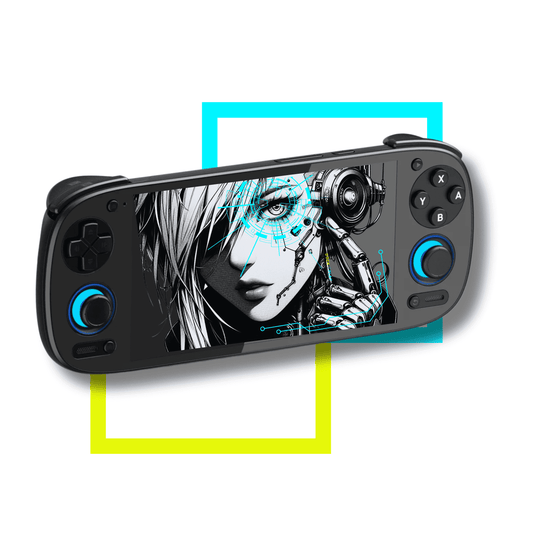
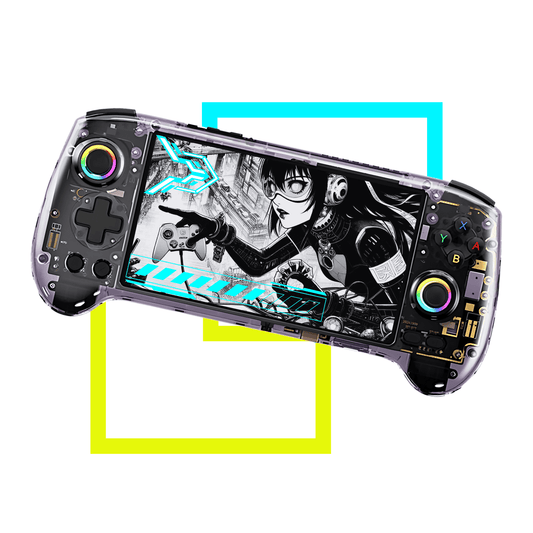
- Anbernic RG557: (With its new optimized SoC, the RG557 is the ideal gateway to the GameCube. It handles a very good part of the catalog at native resolution smoothly, although the most demanding titles may require adjustments for increased resolutions).
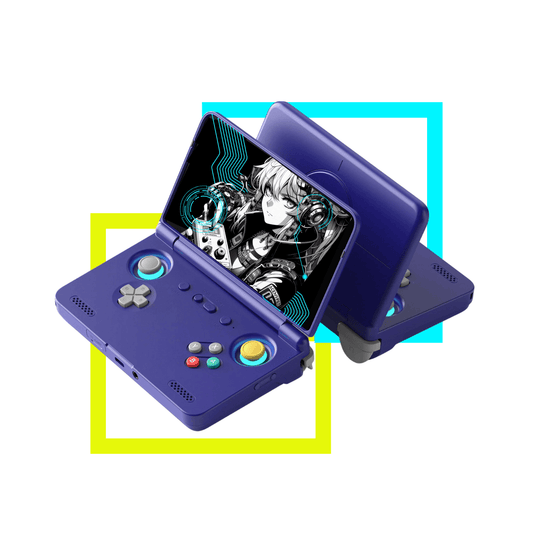
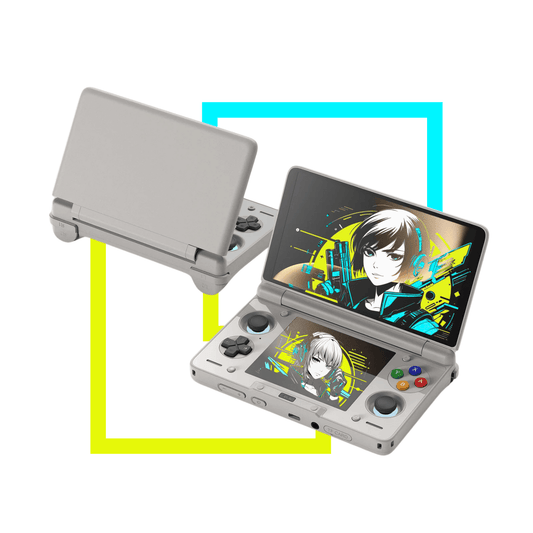
- Retroid Pocket Flip 2: (This clamshell console, equipped with a powerful mid-range 2025 chip, offers excellent portability and is capable of running the majority of GameCube games at native resolution, with good performance for its format.)
- Retroid Pocket 5: (Retroid's new flagship also offers exceptional power, rivaling the Odin 2 Portal for GameCube emulation. Its ability to handle increased resolutions and advanced filters makes it a top choice for purists.)
For the best experience and near-perfect emulation (including increased resolutions):
- Ayn Odin 2 Portal: (The undisputed benchmark of 2025 for GameCube emulation on Android handheld consoles. Its latest generation Snapdragon allows you to run almost the entire game library in native, doubled, or even tripled resolution, with impressive fluidity and visual quality, transforming the experience on iconic titles).
- Steam Deck / ROG Ally / Lenovo Legion Go (laptops): These machines remain the ultimate solutions for GameCube emulation on big screens or at the most extreme resolutions, offering uncompromising power for all graphical enhancements.